


How CBAM Is Changing Who Gets To Supply Europe's Auto Industry
On January 1, 2026, a piece of regulation crossed the line from paper to practice. The Carbon Border Adjustment Mechanism, CBAM, stopped being a reporting exercise and started carrying real financial weight. From that date, every ton of embedded carbon in steel and aluminum entering the EU carries a calculable cost. And that cost doesn't fall on the regulator or the importer alone, but travels upstream, re-pricing every link in the chain.
For automotive buyers who depend on metal tube component suppliers in Asia, Eastern Europe, and beyond, the question has shifted. It's no longer "will CBAM affect us", but "which of our suppliers can survive it".
Related Reading: 2026–2028 EU Automotive Parts Import Regulations: What Global Auto Suppliers Need to Know
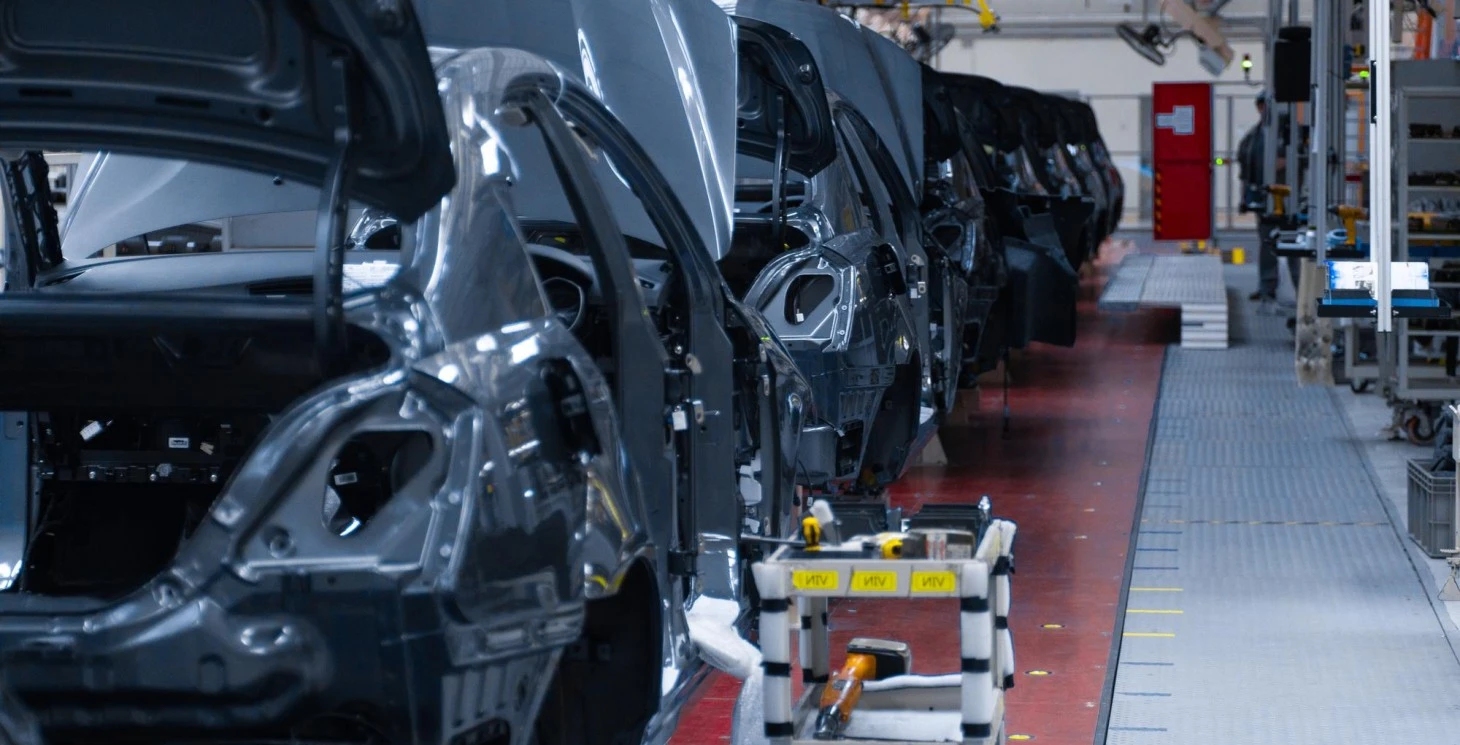
How CBAM Is Filtering the Global Automotive Metal Component Supply Chain
CBAM covers six sectors, but two of them, steel and aluminum, form the structural backbone of automotive manufacturing. From precision steel tubes in seat frames and headrest assemblies to aluminum crash-management components, the materials under CBAM's scope are not peripheral. They're everywhere.
What's new in 2026 is the transmission mechanism. CBAM certificates are priced against EU Emissions Trading System (ETS) allowances, currently trading at approximately €65-80 per ton of CO₂. For a steel tube component with an embedded carbon intensity of 2.1 tons of CO₂ per ton, roughly China's average for blast furnace production, that translates to a carbon surcharge of €137 to €168 per ton of steel content. For comparison, a European steelmaker operating at 1.4 tons of CO₂ per ton pays roughly half that.
These figures don't sit in a spreadsheet. They attach to purchase orders. A supplier whose emissions data is unavailable or unverified will default to EU benchmark values. And numbers are deliberately set high to incentivize transparency. The result: suppliers who cannot document their carbon footprint pay a premium that their competitors do not.
CBAM, in practice, is a filter. Not by law, but by arithmetic.
How the Carbon Cost Gap Reshapes Metal Component Supplier Competition
The gap between automotive tube suppliers is widening along one axis that procurement teams are only beginning to price: carbon intensity.
Consider two precision steel tube suppliers: Both IATF 16949 certified, both capable of meeting the same dimensional tolerances, both quoting competitive prices. Supplier A operates an electric arc furnace (EAF) route with verified emissions data and a renewable energy contract, yielding an embedded carbon intensity of 0.8 tons of CO₂ per ton of product. Supplier B runs a blast furnace route without verified data, defaulting to the EU benchmark of 2.1 tons per ton. The CBAM cost differential: approximately €85-105 per ton of steel content.
That's not a rounding error. On a high-volume automotive program consuming several hundred tons of steel tube components annually, the gap runs into five figures. It will grow every year as ETS allowances tighten and free allocations phase out through 2034. For aluminum tubes, the spread is even starker. Chinese primary aluminum production averages roughly 12-13 tons of CO₂ per ton, compared with a European average of 6-7 tons. The carbon cost gap on aluminum is measured not in tens but in hundreds of euros per ton.
Procurement teams who treat carbon cost as "someone else's problem" are effectively signing off on a hidden supplier premium they haven't modeled.
What Kind of Supplier Automotive Buyers Should Look For in the CBAM Era
If CBAM is filtering the supplier landscape, the question becomes: which suppliers pass through?
Three characteristics separate the suppliers who will hold their competitive position from those who will lose it:
- Verified emissions data, not estimates. The EU's methodology for calculating embedded emissions is specific. It operates at the facility level, distinguishes between direct and indirect emissions, and includes precursor materials by default. A supplier who can hand over a data file with audited, facility-level carbon intensity numbers is fundamentally different from one who offers a rough corporate average or a marketing claim.
- Material coverage that matches your BOM. CBAM covers steel and aluminum today, with a proposed expansion to another 180 downstream steel-intensive and aluminum-intensive products in 2028. Thus, precision steel tube suppliers who work across both material families, precision carbon steel tubes, stainless steel tubes, and aluminum extrusions, can give procurement teams a single point of carbon data management rather than fragmented reporting across multiple suppliers.
- A European operational footprint. CBAM's compliance burden falls on the EU importer. A supplier who maintains a European branch or subsidiary absorbs part of that burden directly, handling carbon documentation, liaising with national competent authorities, and structuring the customs declaration process in a way that reduces friction for the buyer. That's not a minor operational detail, but a structural advantage.
Low-Carbon Partnerships Co-Create a Sustainable Automotive Supply Chain
The suppliers who win in the CBAM era won't be the ones who treat compliance as a checkbox exercise. They'll be the ones who treat carbon data transparency the same way they treat quality management, as a continuous, auditable system that earns trust before a contract is signed.
This is where "co-creation" stops being a marketing word and starts being a supply chain strategy. A buyer and a supplier who co-invest in emissions transparency, sharing facility-level data, aligning on calculation methodologies, synchronizing audit schedules, are building something more durable than a transactional relationship. They're building a supply chain that can absorb regulatory shocks without breaking.
For automotive OEMs and Tier-1 buyers, the choice is straightforward: partner with suppliers who understand that carbon cost is now a hard variable in the landed-cost equation, or watch their procurement models quietly drift out of alignment with reality.